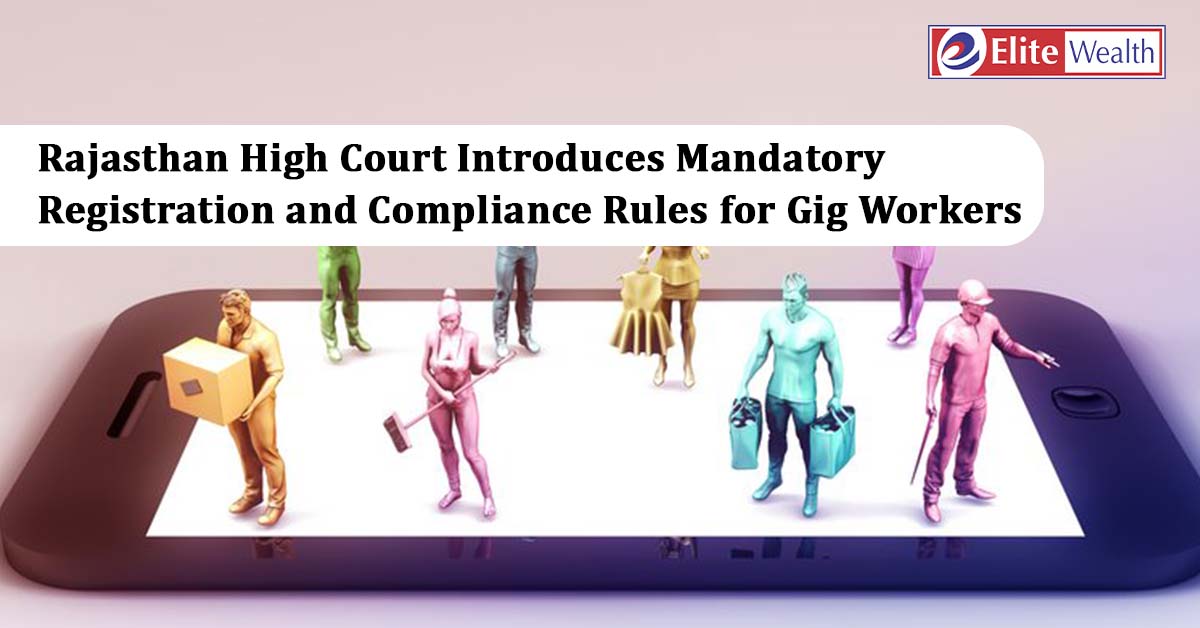
The Rajasthan High Court has issued a landmark directive imposing new regulatory requirements on gig workers associated with platforms such as Ola, Uber, Swiggy, Zomato, and other app-based delivery or transport services. The move is aimed at enhancing transparency, safety, and accountability within the rapidly expanding gig workforce ecosystem, according to media reports.
New Compliance Timeline and Identification Norms
Under the new rules, all gig workers must register with the State Transport Department and the Director General (Cyber) starting February 1, 2026. As part of the compliance framework, platform-based workers will be required to wear a company-issued uniform, carry an official ID badge, and display a QR code for verification while on duty.
Further, vehicles operating under the gig category must transition to commercial licence plates by March 1, 2026, and only authorised riders or drivers linked to their respective platforms will be permitted to operate them.
Cybersecurity and Verification Protocols
The High Court’s ruling also introduces strict measures to counter rising concerns over cyber-related offences involving app-based service providers. All aggregator platforms will now be required to conduct mandatory police verification and full background checks before onboarding workers.
Additionally, companies must implement AI-based monitoring systems to track driver or delivery behaviour in real time. Quarterly data-sharing with state cyber cells has also been directed to ensure red flag activities can be detected proactively.
Focus on Women’s Participation and Safety
Promoting gender inclusivity formed a key component of the judgment. The court instructed app-based service providers to ensure that at least 15% of their active gig workforce comprises women within the next six months.
Over the next two to three years, the representation target is set to rise to 25%, with state authorities expected to oversee implementation. The court has asked the Additional Chief Secretary (Home) to monitor rollout and coordinate inter-agency enforcement.
Summary
The Rajasthan High Court has mandated new compliance norms for app-based gig workers operating through platforms like Ola, Uber, Swiggy, and Zomato. The rules require mandatory registration, commercial licence plates, identity uniforms, police verification, and AI-enabled monitoring by early 2026. The directive also aims to increase women’s participation in the sector and enhance passenger and public safety.
Disclaimer:
This article is intended solely for educational and informational purposes. The securities or companies mentioned are provided as examples and should not be considered as recommendations. Nothing contained herein constitutes personal financial advice or investment recommendations. Readers are advised to conduct their own research and consult a qualified financial advisor before making any investment decisions.
Investments in securities markets are subject to market risks. Please read all related documents carefully before investing.