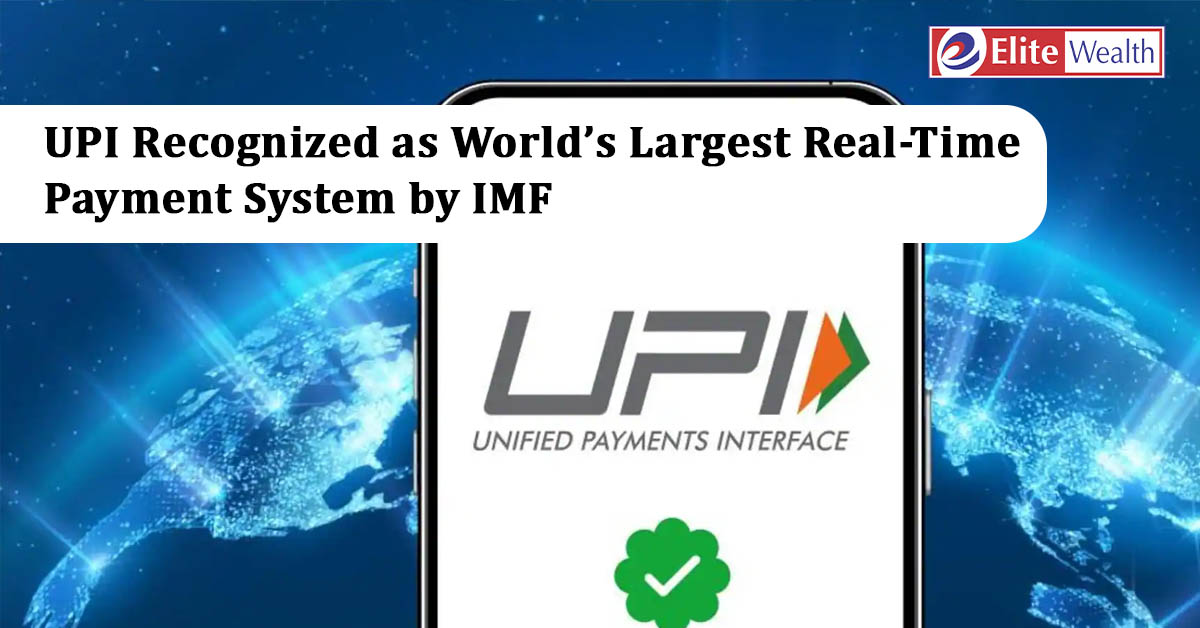
India’s Unified Payments Interface (UPI) has been recognized as the world’s largest and most widely used real-time payment system, according to the International Monetary Fund (IMF, June 25, 2025).
UPI has become a global leader in transaction volume, holding an estimated 49% share of worldwide real-time payment transactions, as per ACI Worldwide’s 2024 report, “The Prime Time for Real-Time Payments.”
Global Transaction Comparison (June 2025)
| Country | Real-Time Transactions (Billion) |
| India (UPI) | 129.3 |
| Brazil | 37.4 |
| Thailand | 20.4 |
| China | 17.2 |
| South Korea | 9.1 |
| Combined (Brazil, Thailand, China, South Korea) | 84.1 |
India’s 129.3 billion transactions far exceed the combined total of Brazil, Thailand, China, and South Korea, demonstrating the scale and robustness of its digital payment ecosystem.
Key Factors Behind UPI’s Growth
- Advanced digital public infrastructure
- Supportive regulatory environment
- Interoperable payment system design
These factors have helped UPI scale rapidly while maintaining efficiency and security.
Government Initiatives to Expand Digital Access
The Government of India, in coordination with the Reserve Bank of India and National Payments Corporation of India (NPCI), has implemented several programs to enhance UPI adoption:
- Payments Infrastructure Development Fund (PIDF): Financial support for banks and fintechs to deploy digital infrastructure in tier-3 to tier-6 regions.
- BHIM-UPI Incentive Programs: Promoting low-value transactions for small merchants.
- Digital Contact Points: ~5.45 crore points operational as of October 31, 2025.
- QR Code Distribution: ~56.86 crore QR codes provided to 6.5 crore merchants.
Impact on Digital Payments Ecosystem
- Increased merchant acceptance of UPI and RuPay payments
- Integration into public service delivery, transportation, and e-commerce
- India’s leadership in real-time payments technology globally
UPI’s extensive adoption highlights India’s position as a world leader in digital retail payments, driven by strong infrastructure, regulatory support, and targeted government initiatives for financial inclusion.
Disclaimer:
This article is intended solely for educational and informational purposes. The securities or companies mentioned are provided as examples and should not be considered as recommendations. Nothing contained herein constitutes personal financial advice or investment recommendations. Readers are advised to conduct their own research and consult a qualified financial advisor before making any investment decisions.
Investments in securities markets are subject to market risks. Please read all related documents carefully before investing.