

India’s largest automaker outlines an ambitious strategy to build a dense electric vehicle charging network as it prepares to launch its first fully electric SUV, the EVitara.
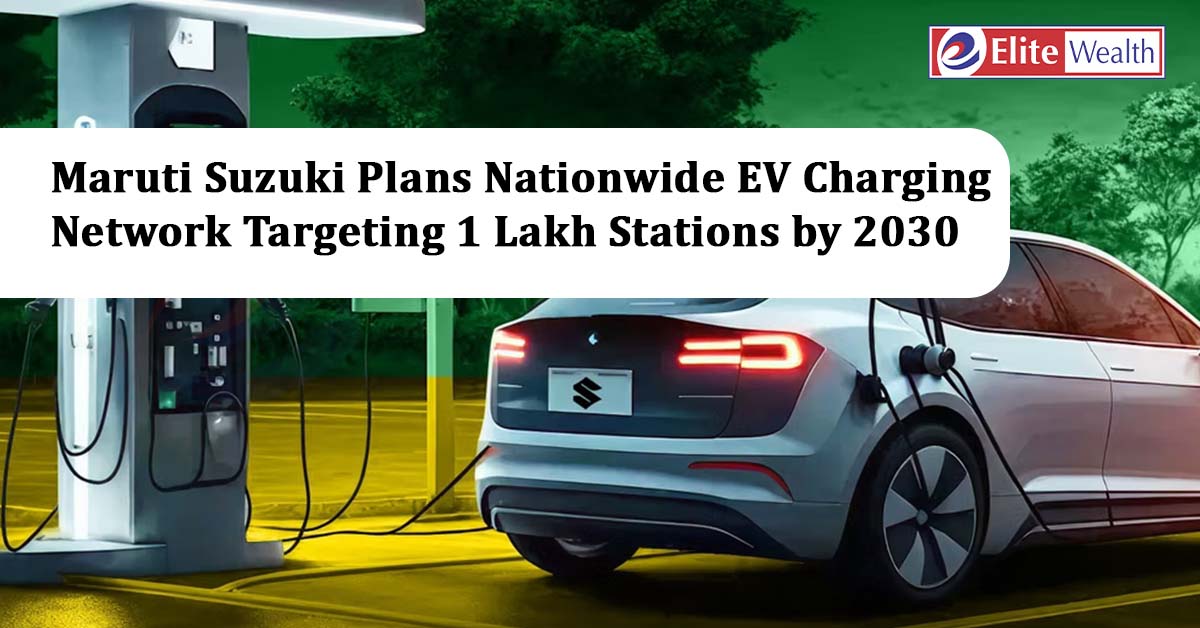
Maruti Suzuki has announced a large-scale infrastructure plan aimed at supporting India’s electric mobility expansion, with a target of deploying one lakh EV charging stations across the country by 2030. The move comes ahead of the commercial rollout of its first pure-electric offering, the EVitara, expected to launch next year.
Partho Banerjee, Senior Executive Officer – Marketing & Sales, said the company’s electric vehicle entry is backed by both product maturity and infrastructure readiness.
“We are entering the EV space with confidence. The EVitara has now received ARAI certification with a range of 543 km, exceeding earlier estimates,” he noted.
Addressing Range Anxiety Through Network Density
Maruti Suzuki has placed strong emphasis on alleviating consumer concerns around battery range and charging accessibility. Tests were conducted across extreme endpoints of the country—including Kanyakumari, Srinagar, Bhuj, and Kaziranga—to validate real-world usability.
Banerjee added that the company already has access to nearly 70% of the country’s existing fast-charging infrastructure, and plans to build on this advantage.
“We believe customer trust must come before sales volume. Just like our journey four decades ago, we’re prioritizing reliability and confidence as the foundation of our EV strategy,” he said.
Strategic Rollout Across Major Cities and Corridors
Maruti Suzuki is developing a dense charging grid across India’s top 100 cities, placing chargers at intervals of 5 to 10 kilometers. The company has also begun building out long-distance travel corridors — for example, 63 fast chargers have already been installed along the Delhi–Chandigarh route to support intercity EV travel.
EVitara to Lead the Company’s Electric Portfolio
Built on a dedicated electric platform—not adapted from an existing ICE model—the EVitara marks a major milestone in the company’s product roadmap. International demand has already emerged, with the model showcased in the UK market, bookings opening in Japan, and retail sales set to commence globally in the coming months.
Banerjee emphasized that the timing of the India launch was intentional:
“We waited until both the ecosystem and customer expectations aligned. Our approach is long-term and focused on enabling a smooth national EV transition.”
Summary
Maruti Suzuki plans to set up 1 lakh EV charging stations by 2030 as part of its wider electric mobility strategy, beginning with the launch of the EVitara. The company aims to improve charging access, ease range anxiety, and build customer confidence as India shifts toward sustainable transportation.
Disclaimer:
This article is intended solely for educational and informational purposes. The securities or companies mentioned are provided as examples and should not be considered as recommendations. Nothing contained herein constitutes personal financial advice or investment recommendations. Readers are advised to conduct their own research and consult a qualified financial advisor before making any investment decisions.
Investments in securities markets are subject to market risks. Please read all related documents carefully before investing.