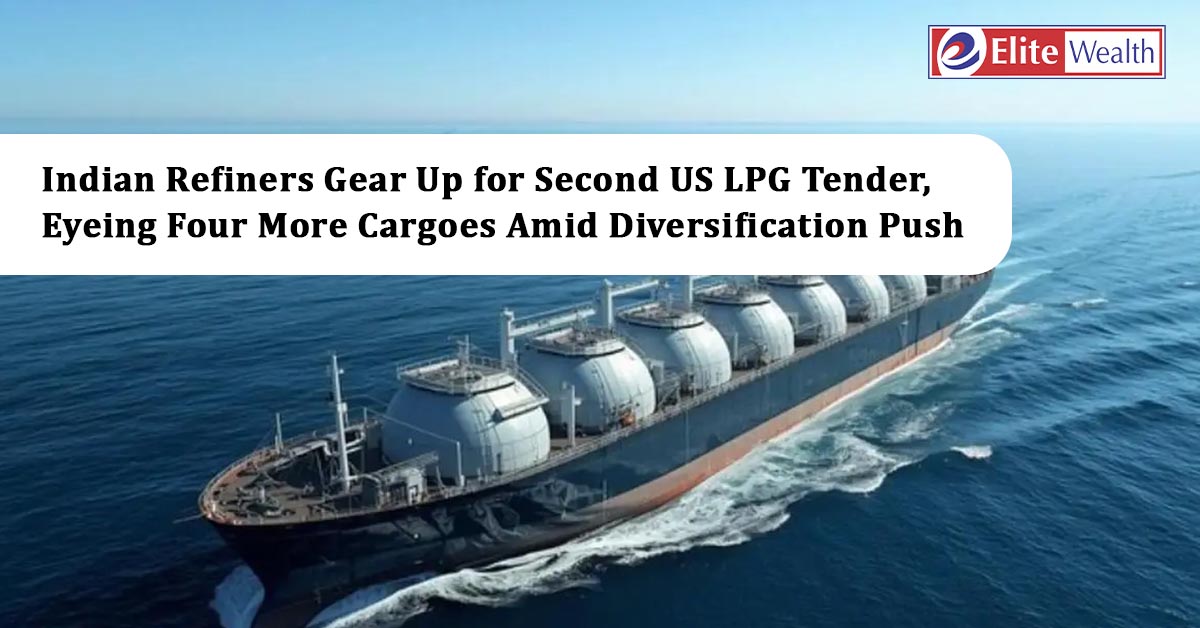
In a continued effort to diversify energy imports and strengthen bilateral trade ties with the United States, Indian state-run refiners are preparing to issue a second tender in the coming months to secure four additional cargoes of liquefied petroleum gas (LPG) from U.S. suppliers. This follows the successful award of their inaugural long-term U.S. LPG contract earlier this year, signaling a strategic pivot away from traditional Middle Eastern sources.
The move comes as Indian Oil Corporation Ltd (IOCL), Bharat Petroleum Corporation Ltd (BPCL), and Hindustan Petroleum Corporation Ltd (HPCL) – the country’s three major state-owned oil majors – aim to bolster their LPG procurement pipeline beyond the 2 million metric tons already locked in for delivery starting in 2026. The new short-term tender, expected to be floated within a few months, will target approximately four very-large gas carrier (VLGC) cargoes, providing a flexible bridge to ongoing diversification efforts.
LPG, a vital blend of propane and butane primarily used as subsidized cooking fuel for millions of Indian households, constitutes a cornerstone of the nation’s energy security. India imported around 65% of its 31 million tons of annual LPG consumption in 2024, with over 90% sourced from long-term deals with Gulf producers like Saudi Arabia, the UAE, Qatar, and Kuwait. However, escalating geopolitical tensions, including U.S. tariffs on Indian goods and pressure to reduce reliance on Russian crude, have prompted New Delhi to recalibrate its import strategy.
“This second tender underscores our commitment to a multi-source approach for LPG supplies,” an industry source familiar with the matter told Business Standard on condition of anonymity. “It’s not just about volume; it’s about hedging against supply disruptions and aligning with broader trade objectives with Washington.”
A Landmark First Deal Sets the Stage
The announcement builds on a historic milestone achieved in November 2025, when the trio of refiners awarded their first joint, long-term U.S. LPG tender to global energy giants Chevron Corp., Phillips 66, and TotalEnergies Trading SA. Valued at roughly 2 million metric tons – equivalent to about 48 VLGC cargoes – the one-year contract covers deliveries beginning in January 2026 and marks India’s first structured agreement for U.S.-sourced LPG.
Priced on a delivered basis from the U.S. Gulf Coast, the deal incorporates flexibility clauses allowing suppliers to source one in every four cargoes from alternative origins, mitigating risks from logistics challenges or price volatility. While exact pricing remains confidential, sources indicate the contracts were competitively bid, capitalizing on a favorable arbitrage window created by China’s reduced U.S. purchases amid ongoing tariff disputes.
This shift is part of a larger diplomatic and commercial recalibration. Under U.S. President Donald Trump’s administration, India faces a 50% import levy on select goods, exacerbating a $30 billion-plus trade surplus that has strained relations. In response, Prime Minister Narendra Modi’s government has prioritized ramping up American energy imports – from crude oil to now LPG – as a counterbalance. Earlier in April 2025, India scrapped import duties on certain U.S. products, including LPG, paving the way for deeper integration into global supply chains.
The refiners had signaled this intent as early as October 2025, when they extended the deadline for their initial tender to October 17 amid robust bidder interest. By mid-November, the awards were finalized, with industry insiders hailing it as a “diplomatic two-for-one”: enhancing energy security while easing tariff pressures.
Disclaimer:
This article is intended solely for educational and informational purposes. The securities or companies mentioned are provided as examples and should not be considered as recommendations. Nothing contained herein constitutes personal financial advice or investment recommendations. Readers are advised to conduct their own research and consult a qualified financial advisor before making any investment decisions.
Investments in securities markets are subject to market risks. Please read all related documents carefully before investing.