

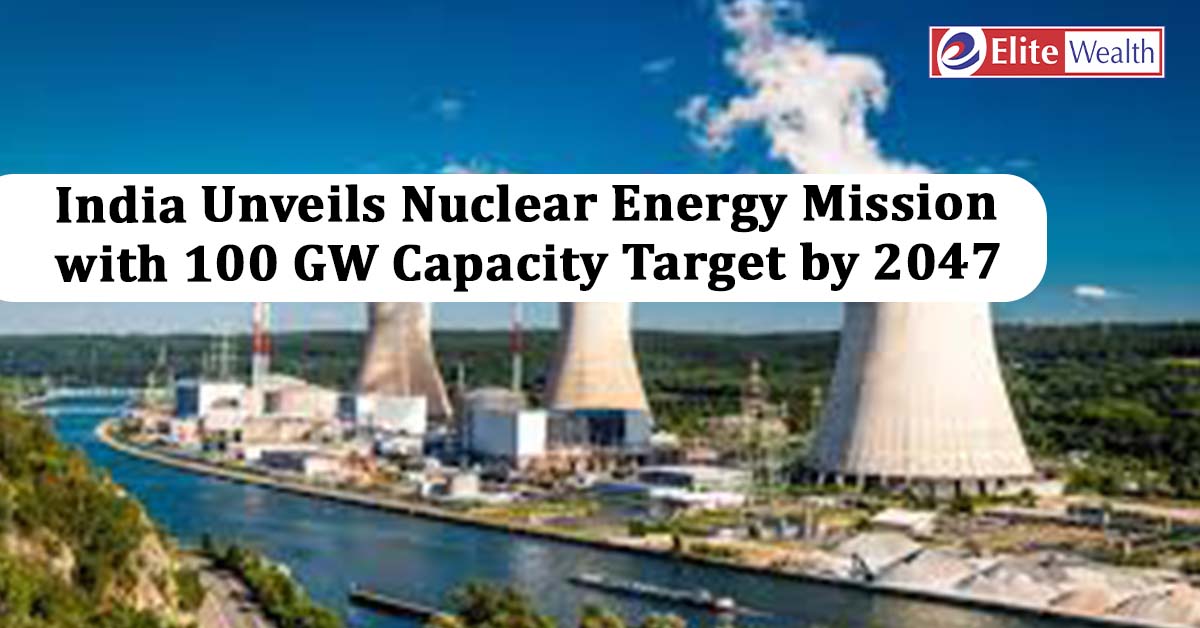
India has launched a Nuclear Energy Mission with the objective of developing around 100 GW of nuclear power capacity by 2047, as outlined by Prime Minister Narendra Modi. The mission focuses on expanding nuclear generation through a combination of indigenous technologies, the Make in India initiative, and international collaboration.
Under the roadmap, Nuclear Power Corporation of India Limited (NPCIL) is expected to contribute about 54 GW of capacity through the construction of new nuclear power plants. These projects will be based on a mix of indigenous Pressurised Heavy Water Reactors (PHWRs) and Light Water Reactors (LWRs), including facilities developed with global cooperation.
To support decentralised and scalable nuclear solutions, the Bhabha Atomic Research Centre (BARC) is working on the design and development of Small Modular Reactors. These include the 200 MWe Bharat Small Modular Reactor (BSMR-200) and the 55 MWe SMR-55. The proposed reactors are intended for use as captive power plants for energy-intensive industries such as aluminium and steel, particularly in locations where fossil fuel-based units are being phased out. They are also planned for deployment in remote and off-grid regions to provide clean energy support.
In parallel, India is developing a high-temperature gas-cooled reactor with a capacity of up to 5 MW. Following the Union Budget FY25 announcement permitting private sector participation in nuclear energy, NPCIL has issued a request for proposal for setting up 220 MW PHWR-based Bharat Small Reactors, each with capacities of up to 220 MW.
India currently has mature technology for 700 MWe PHWRs, along with advanced small reactor designs such as the BSMR-200 and SMR-55. Most of the required hardware is within the capabilities of domestic industries, supported by ongoing research and development activities under the Department of Atomic Energy. Nuclear power, characterised by non-carbon emissions, is positioned as a key component of India’s clean energy transition.
Summary:
India has launched a Nuclear Energy Mission aiming to build about 100 GW of nuclear capacity by 2047. The plan includes large nuclear plants by NPCIL, development of small modular reactors by BARC, private sector participation, and expanded use of indigenous technologies to support clean and decentralised energy generation.
Disclaimer:
This article is intended solely for educational and informational purposes. The securities or companies mentioned are provided as examples and should not be considered as recommendations. Nothing contained herein constitutes personal financial advice or investment recommendations. Readers are advised to conduct their own research and consult a qualified financial advisor before making any investment decisions.
Investments in securities markets are subject to market risks. Please read all related documents carefully before investing.